
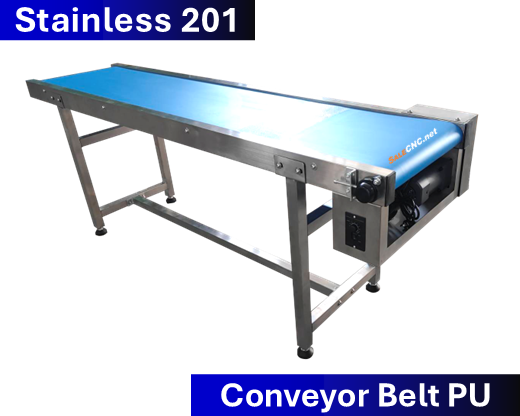
Stainless Steel 201
Conveyor Belt PU
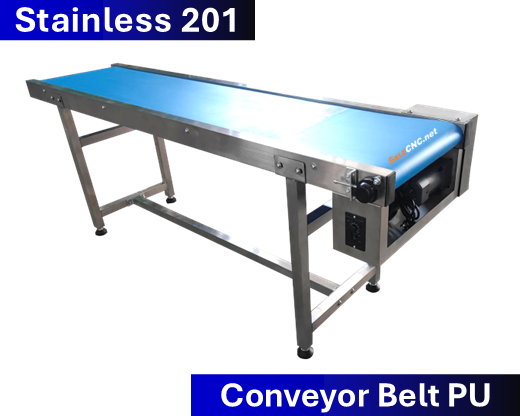
🔧 What is a PU Conveyor Belt with Stainless Steel 201 Frame?
This is a conveyor system utilizing a PU (Polyurethane) belt, suitable for food-contact applications. The frame, legs, and base are constructed from Grade 201 Stainless Steel. While more economical than SUS304, grade 201 stainless steel has certain limitations.
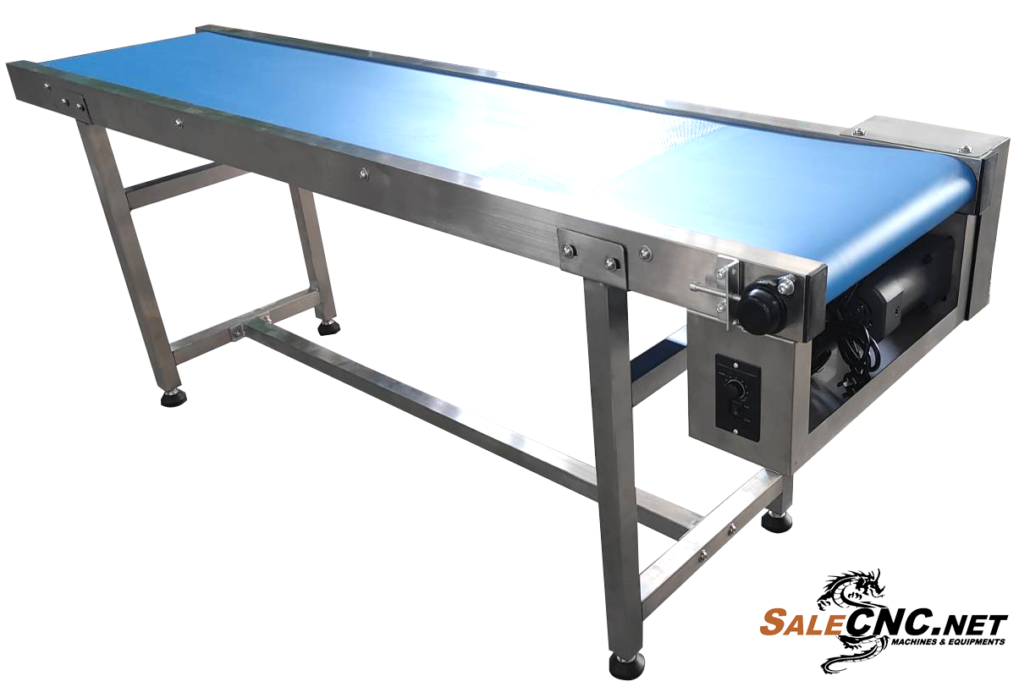
- Conveyor Belt PU with Stainless Steel Frame: 400x1500x800 mm
- Speed: 8-13 m/min; Adjustable Leveling Feet: 100 mm.
- Load Capacity: 30 Kg. across the entire belt.
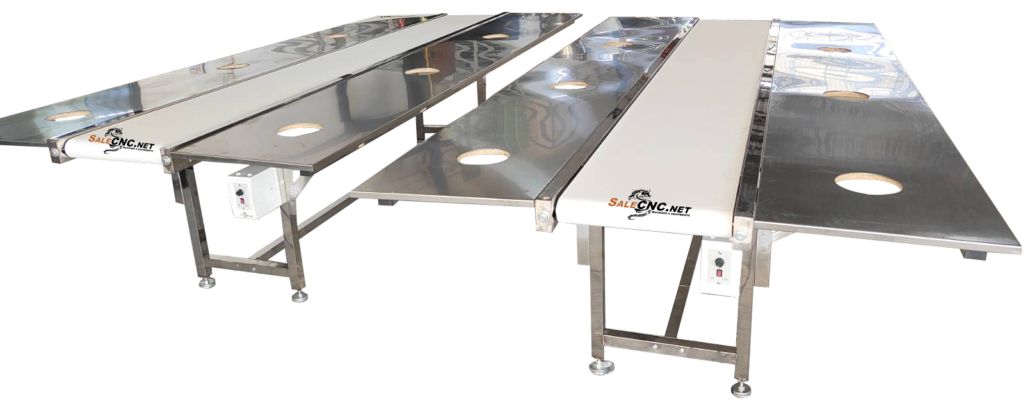
- Conveyor Belt PU with SUS304 Stainless Steel Frame: 500×3000 mm + SUS304 Stainless Steel Table
- Speed: 3-5 m/min; Adjustable Leveling Feet.
- Load Capacity: 30 Kg. across the entire belt.
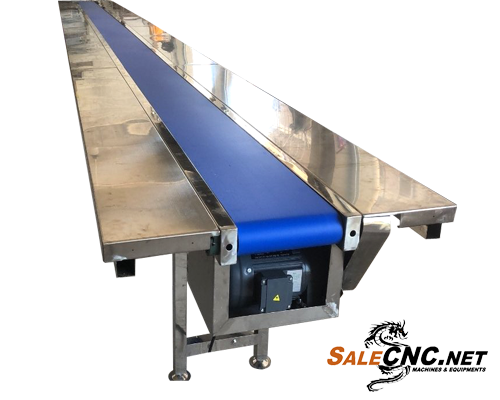
- Conveyor Belt PU with SUS304 Stainless Steel Frame: 400×3000 mm + SUS304 Stainless Steel Table
- Speed: 3-5 m/min; Adjustable Leveling Feet.
- Load Capacity: 30 Kg. across the entire belt.
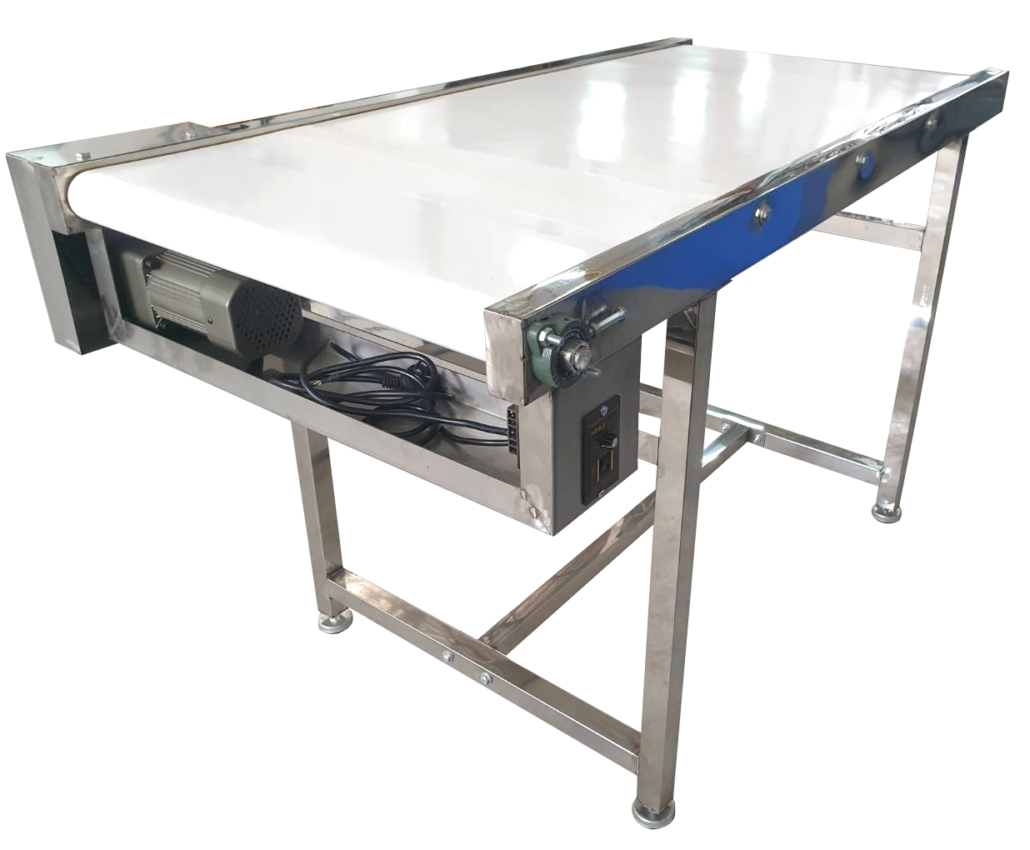
- Conveyor Belt PU with SUS304 Stainless Steel Frame: 500×1500 mm
- Speed: 8-13 m/min; Adjustable Leveling Feet.
- Load Capacity: 30 Kg. across the entire belt.
🔹 Properties of Grade 201 Stainless Steel:
- Belongs to the Cr-Ni-Mn (Chromium-Nickel-Manganese) group.
- Slightly higher strength compared to 304.
- Approximately 20-30% less expensive than SUS304.
- Offers moderate corrosion resistance, but inferior to SUS304.
- Not recommended for high-humidity environments or frequent contact with chemicals.
✅ Advantages of PU Belt + Grade 201 Stainless Steel Frame:
- Lower overall system cost compared to SUS304 stainless steel.
- Suitable for general applications where frequent washing is not required.
- Can be used with Food Grade PU belts in dry applications.
- Slightly lighter weight.
⚠️ Cautions / Limitations:
- Not suitable for applications requiring frequent washing or high humidity, such as fresh food processing.
- Grade 201 stainless steel may develop rust over time in wet or acidic environments.
- Careful consideration is needed for food industry applications to assess washing frequency.
🏭 Recommended For:
- Dry industries such as bakeries, packaging, or dry cosmetic products.
- Applications prioritizing low cost and infrequent water contact.
- Conveyor systems in dry rooms or humidity-controlled areas.
📌 Summary of Differences: SUS201 vs. SUS304
| Property | SUS201 | SUS304 |
|---|---|---|
| Rust Resistance | Moderate | High |
| Price | Lower | Higher |
| Application | Dry Applications | Wet Applications, Food-grade |
| Lifespan | Shorter | Longer |
| Food Safety | Adequate (if not washed frequently) | Superior |
Distinction Between PVC, PU, and Stainless Steel Conveyor Belts
Materials and Properties
PVC (Polyvinyl Chloride)
✅ Flexible and offers moderate chemical resistance.
✅ Lower cost compared to PU and stainless steel.
✅ Suitable for general applications like packaging or transporting materials without oil and grease.
❌ Not resistant to high temperatures and may wear out faster than PU.PU (Polyurethane)
✅ Better resistance to grease, oil, and chemicals than PVC.
✅ Smoother surface, ideal for food and pharmaceutical industries.
✅ Higher tear resistance and longer lifespan than PVC.
❌ Higher cost than PVC.Stainless Steel
✅ Strong, resistant to impact and abrasion.
✅ Suitable for industries requiring high hygiene standards, such as food and beverage.
✅ Resistant to high temperatures and chemicals.
❌ High cost and potentially heavy.
Suitable Applications
- PVC → General goods transportation, e.g., packaging, electronics.
- PU → Food and pharmaceutical industries, applications involving oil or grease.
- Stainless Steel → Applications requiring high hygiene, high temperatures, or high humidity, e.g., food and beverage processing plants, heavy industries.










Reviews
There are no reviews yet.